
Set screen time, choose which websites and apps are allowed, and see where your kids’ time goes. This page walks you through every Child Control feature, on Windows and on Android.
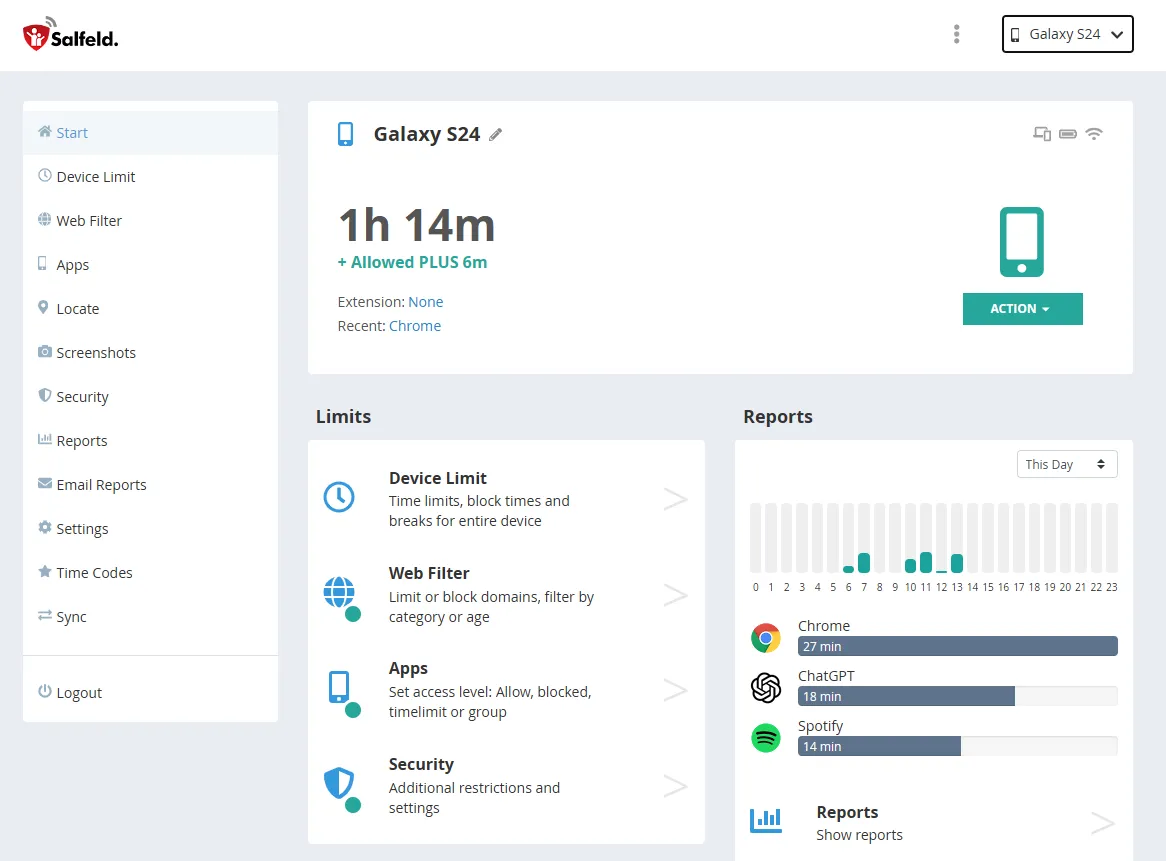
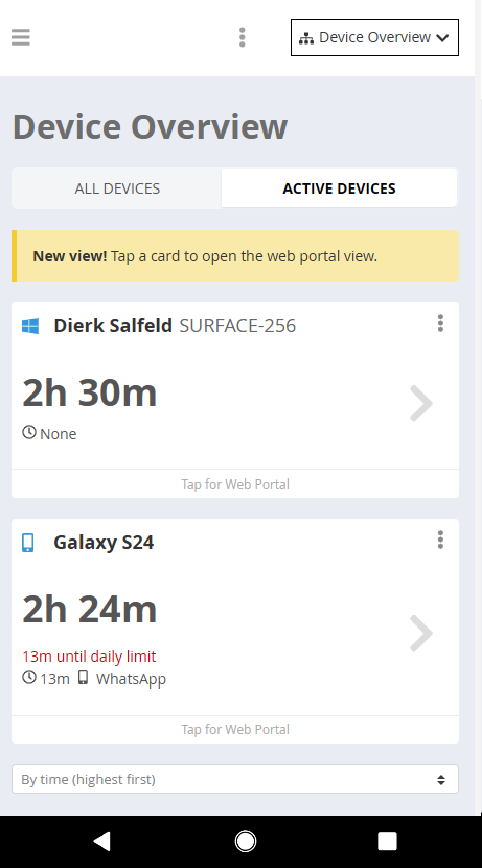
Decide how long your kids can use the PC and the phone, per day, week or month. Your kids get a warning before time runs out. Then the PC locks or shuts down, and the phone shows a lock screen.
Block out specific times too, like homework time or after 9 p.m.
In our experience, kids may push back at first, but a clear limit enforced by the software is usually accepted without much fuss.
Good to know: learning apps and programs set to “Allowed PLUS” stay available after the limit is reached. You can even let your kids earn bonus time with them, app by app.

The internet is great for learning and fun, but kids can stumble onto websites that aren’t right for their age. Child Control’s web filter blocks unwanted websites by category or age group. For younger kids, allow only the websites you’ve chosen, and everything else stays blocked.
Put a time limit on any single website, so an online game doesn’t get in the way of homework. On Windows, the filter works in every browser, and on Android, in Chrome, Firefox and other browsers.
Free for 30 days. No credit card. No subscription.
You can change every setting in the web portal or the Child Control parent app. The portal works in any browser, including on iPhone, iPad or Mac, so you never need your kids’ device in hand to change a rule.
The web portal’s reports show which apps and websites your kids used, and how long they spent on each. If a website was blocked by mistake, you can unblock it with one click. You can also get these reports by email, daily or weekly.

Phone time’s up, so out comes the tablet? With Roaming, screen time is counted across all your kids’ devices together. Say you allow 2 hours a day: once those 2 hours are used up, they’re used up on the PC, the phone and the tablet.
Turn on Roaming in the web portal. All you need is Child Control on each device your kids use.
Homework done or chores finished? Give your kids a Time Code, a 6-digit code that unlocks extra time for the program or app you choose.
You can also make rewards automatic: mark certain apps, such as learning apps, as bonus apps, and your kids earn extra time just by using them. As we like to say at Salfeld: first learn, then play. See 15 ad-free learning apps that work well as bonus apps.
Sooner or later, many kids test the limits. Child Control closes the most common loopholes, and you choose how tightly each device is locked down.
Even a tech-savvy kid can’t simply shut Child Control down. You can also stop your kids from changing the PC’s clock to get extra time. And if your kids create a new account to get around the rules, Child Control signs it out right away.
If your kids close Child Control, it restarts on its own. If they keep trying to get around it, for example by switching rapidly between screens, the phone locks for as long as you choose. On Samsung phones, Child Control can even stop them from factory-resetting the phone or changing the time.
Both versions limit screen time, filter the internet and send reports. On Windows, the web filter works in every browser and you can limit each program. On Android, you limit each app, the filter works in Chrome, Firefox and other browsers, and you can see where the phone is. One license works on both.
Your kids get a warning before time is up. Then the PC locks or shuts down, and the phone shows a lock screen. Apps you’ve set to “Allowed PLUS”, such as learning apps, stay available.
With Roaming, Child Control counts the time spent on all your kids’ devices together. If you allow 2 hours a day, those 2 hours cover the PC, the phone and the tablet combined. You turn on Roaming in the web portal.
Yes. You change limits and filters in the web portal from any browser, or in the Child Control parent app on your phone. You can also approve or decline your kids’ requests for extra time from wherever you are.
No. You only need a license for your kids’ devices. The web portal is free and works in any browser, on any device, including iPhone and iPad. On Android, our parent app is free too.
Free for 30 days. No credit card. No subscription.
